arrow-double-right arrow-noline-right arrow-lrg-left arrow-lrg-right arrow-med-down arrow-med-left arrow-med-right arrow-med-up arrow-sml-right checkmark close close-sml contact-card event-clock linkedin menu minus outbound-link phone plus print search-lrg search-sml twitter Winthrop-mark

The Elvis Presley Estate Loses Bid to Block ELVIS JUICE Beer

January 31, 2018—Trademark disputes involving breweries are nothing new, with breweries battling each otherwineries, and even cities over trademarks. We can now add estates of dead celebrities to the mix, as the Estate of Elvis Presley continues its battle against UK-based BrewDog over its ELVIS JUICE I.P.A.

The Elvis Estate first attempted to resolve the dispute through a cease and desist letter. In response, BrewDog’s owners, James Watt and Martin Dickie, changed their first names to “Elvis.”

And before you ask, yes, the above picture is just a marketing version of the official name change document. Although the battle has been waged for decades with the U.K. Employment Agency, “Beer Pirate” is not yet an officially recognized title. For the potential Elvis fans with the proclivity toward belief in aliens and other conspiracies, the official documents are also available here.

When BrewDog failed to heed the Estate’s demand of “Don’t,” the Estate brought an action against BrewDog at the U.K. Intellectual Property Office. Apparently the UKIPO was unmoved by the Elvis Brothers’ claims and, in July of 2017, the Estate prevailed. But before Elvis could leave the building, BrewDog appealed. Apparently the appellate body had a few more suspicious minds. Just last week, the appellate body reversed the prior decision, concluding:

On balance I do not think that the hearing officer was entitled to take judicial notice that beer consumers who see the word Elvis will always think of Elvis Presley. The two marks are too different for there to be direct confusion. Even with imperfect recollection the average consumer will not mistake Brewdog Elvis Juice for Elvis. Put simply, the common element of Elvis is not enough on its own to make consumers think there is a link between the mark Elvis and Brewdog Elvis Juice.

As the quote suggests, the UKIPO’s decision was based specifically on a trademark that includes the brewery’s house brand BREWDOG. This may mean some extra steps for the brewery to ensure that BREWDOG always appears in close proximity to the ELVIS JUICE trademark, but the steps may be worth it to protect BrewDog’s growing investment in the name. BrewDog recently expanded operations, opening a satellite brewery in the United States near Columbus, Ohio. On top of that, BrewDog even won a bronze medal in its first appearance at the Great American Beer Festival last year.

Although the Elvis Estate may be licking its wounds somewhere in the heartbreak hotel, the war isn’t over yet. As you might expect, the UKIPO’s office has no authority here in the U.S. In fact, BrewDog has a pending application for the mark BREWDOG ELVIS JUICE that was approved for registration by the U.S. Trademark Office. On December 27, the company that manages the intellectual property on behalf of the Elvis Estate filed a Request for Extension of Time to Oppose the application. Will the recent loss temper the Estate’s position? Or is it now or never for the Elvis Estate to make a stand? We might have a better idea after April 25, when the Estate’s first extension request runs out.

As of the date of publication, there is no word on whether Elvis Costello also objects to BrewDog’s beer.

Green Bay Packers Enforce “Titletown” Mark Against High School Football News Series

January 26, 2018—Tis’ the season for football, not just on the gridiron, but also at the U.S. Patent and Trademark Office. Shortly after the “Minneapolis Miracle,” as we reported this week, the Minnesota Vikings applied for registered marks on the phrase. And with the “big game” approaching, teams have titles on the mind–even those that aren’t in contention (ahem, Green Bay Packers).

Just one week ago, the Green Bay Packers initiated an opposition proceeding with the Trademark Trial and Appeal Board (the “TTAB”) against McClatchy U.S.A., a publishing company associated with the Fort Worth Star-Telegram. The dispute stems from the Star-Telegram‘s use of “Titletown, TX” as the title of a 20-short-video documentary series chronicling “the story of the 2016 Aledo [TX high school] Bearcats and their quest for a sixth state [football] title in eight years.”

Courtesy: PBS

The Packers have owned registered competing marks, such as “Titletown U.S.A.,” “Titletown,” and “Titletown Towel” since as early as 1993 (though, the Packers assert they have “made widespread and continuous use” of the marks since the 1960s). The Packers appear to have only begun policing the Titletown name at the TTAB since the start of this decade, however, filing five oppositions against related marks, such as “Title Town Talk Show” and “Titletown Brewing Co.”

The Titletown mark has acquired additional meaning and value to the Packers since the organization opened a development district by the same name outside Lambeau Field last year. The Packers invested almost $65M to complete the first phase of the district by this fall. The Titletown District includes a hotel, sports medicine clinic, ice skating rink, restaurant, and artificial tubing hill. And this summer, it got its own logo:

Courtesy: Twitter

The Packers allege that the “Titletown, TX” mark and use in the Texas video documentary series creates a likelihood of confusion and dilutes the “Titletown” and related marks. Why? Because the Star-Telegram uses the mark in connection with football. And that conflicts with the general public’s wide recognition of the mark “as being associated with a single source, and further recognizing the single source as [the Packers].” And the Packers allege that the Titletown name is distinctive with regard to entertainment, video, news, and commentary related to football such that it has acquired secondary meaning. Not only that, but the Packers consider the mark “famous and exclusively associated with [the Packers] in the mind of the consuming public.”

Setting aside the high likelihood that several fanbases and regions across the United States would likely dispute the Packers’ allegations as to fame and widespread recognition and acceptance, the primary questions before the TTAB are whether the use of the “Titletown, TX” mark in the short-video series is likely to cause confusion, mistake, and/or deception as to the source or origin of goods and services. And, further, whether use of the mark is likely to dilute the distinct quality of the Packers’ marks.

Generally, the strength of a mark depends on whether it is arbitrary or fanciful, suggestive, or descriptive. Because the Packers argue distinctiveness and secondary meaning, the organization appears to contend that the mark is descriptive (the lowest strength outside of generic), implying that the Packers are title winners. And historically, this is true; the Packers have been league champions a record 13 times (9 more than the nearest rival team, the Chicago Bears). And the Packers have won three consecutive NFL titles twice. Interestingly, though, the Aledo Bearcats have also won three consecutive state titles twice. This could set up a descriptive fair use defense for Star-Telegram.

When it comes to likelihood of confusion, the primary factors include: whether the use is related, the strength of the mark, proximity of the use, similarities of the marks, evidence of actual confusion, marketing channels employed, the degree of care likely to be exercised by consumers, the user’s intent in selecting the mark, and the likelihood of expansion of product/service lines. The Packers might have a case, but not a very strong one. Star-Telegram‘s use may be related to how the Packers use the Titletown mark in some contexts. But the Packers use the Titletown mark in multiple ways, only one of which relates to reporting about football. Indeed, the Packers are beginning to use the mark more in connection with the new Titletown District. Star-Telegram‘s use is in a very different market: Texas vs. primarily Wisconsin. The use relates to different football leagues: high school vs. the NFL. And the marketing channels are different: online newspaper vs. broadcasts. Ultimately, it seems unlikely that a typical consumer would confuse the two uses: think cheeseheads vs. longhorns.

When it comes to dilution, the primary inquiry is whether the use of a mark is likely to impair the mark’s distinctiveness or harm the reputation of the famous mark. The Packers allege that “[a] recent survey concluded the term TITLETOWN is known to virtually the entire population of consumers surveyed and a substantial majority of those who are aware of the term TITLETOWN, associate it specifically with the Green Bay Packers.” This may demonstrate distinctiveness. On the other hand, it is difficult to see how a short-video series on successful high school football teams in Texas would harm the Titletown mark’s distinctiveness as to the Packers and professional football or harm the reputation of the mark.

McClatchy has until February 26, 2018 to answer the Packers’s opposition. By then, there will be a new reigning NFL titleholder, much to the envy of the allegedly-undisputed Titletown team. But even more to the Packers’s envy, the new titletown (or place of the title game) will technically be Minneapolis.

Court Protects Louis Vuitton from Inability to Understand Obvious Joke

January 12, 2018—For the past several years, DuetsBlog has covered fashion house Louis Vuitton’s outlandish trademark “bullying” against law schoolsdog toys, photographers, and movie studios. Most recently, we discussed the brand’s latest high-profile lawsuit against rival luxury canvas tote maker (sarcasm), My Other Bag, for trademark infringement and dilution.

To the casual observer, one might not be able to distinguish My Other Bag’s signature tote (which on one side says “My Other Bag,” and on the other has a cartoon picture of a bag) from that of Louis Vuitton’s “Speedy Satchel.” Case in point:

Too bad for Louis Vuitton the test for parody is largely based on the casual observer–or, at least those with “a modicum of intelligence.” Even they can tell that My Other Bag’s product was a joke, the District Court held.

My Other Bag Seeks Reimbursement for Louis Vuitton’s Obviously-flawed Lawsuit

After successfully defending itself against Louis Vuitton’s claims, My Other Bag filed a motion for attorneys’ fees incurred in responding to Louis Vuitton’s highly questionable suit, citing the Supreme Court’s recent decision in Octane Fitness v. Icon Health & Fitness, 134 S. Ct. 1749, 1758 (2014). The Lanham Act provides for attorneys’ fees in “exceptional cases,” and it is hard to see how this case might not be one of them, where the parody was–in the words of the District Court–“obvious.” Octane Fitness interpreted “exceptional” under the Patent Act’s identical language to depend on the circumstances and strength of a party’s litigating position (as compared to the typical case).

On January 8, 2018, the District Court–to the surprise of many–denied My Other Bag’s motion, sidestepping whether Octane Fitness applies to the Lanham Act and holding that fees were not appropriate for “several reasons.” Louis Vuitton Malletier, S.A. v. My Other Bag, Inc., No. 14-CV-3419 (JMF), 2018 WL 317850 (S.D.N.Y. Jan. 8, 2018). They include:

  1. Although the District Court and the Second Circuit “did not find this case to be a particularly close call, it cannot say that Louis Vuitton’s arguments were so objectively unreasonable (as either a legal or factual matter) that no party ‘could see an opening . . . through which the argument[s] could be squeezed,’” primarily because dilution by blurring and infringement are fact-intensive and based on “subtle” multi-factor analyses.
  2. That a use is parody does not necessarily resolve a dilution or infringement claim, such as when a trademark is used as as designation of source, “and Louis Vuitton advanced colorable (albeit unsuccessful) arguments that [My Other Bag’s] totes designated Louis Vuitton as their source.” The District Court also ironically pointed to a “flawed and distinguishable” case that Louis Vuitton has previously won as evidence that its position was not objectively unreasonable.
  3. The fact that Louis Vuitton did not show loss of sales or diminution of status is irrelevant because dilution is actionable regardless of actual or likely confusion (citing 15 U.S.C. § 1125(c)(1)).
  4. Louis Vuitton did not litigate the case “in an exceptionally vexatious and coercive manner,” but rather using merely “acceptable, if aggressive, litigation tactics” that were in some instances “regrettable,” but not exceptionally bad.
  5. “Louis Vuitton’s aggressive efforts to protect its trademarks have, on occasion, veered toward the unseemly.” The David-and-Goliath match-up was also concerning. However, Louis Vuitton had good reason to aggressively seek enforcement of its marks because if it didn’t, it could risk losing its rights. Moreover, Louis Vuitton has a history of winning many of its cases.

The District Court’s Precedent Will Likely Lead to More Undeserved Settlements in Parody Defense Cases

It is difficult to agree with the District Court’s conclusion on fees in this case, especially in view of the fact that Louis Vuitton is branded as “one of the biggest trademark bullies around.” There is something to be said for diligent protection of trademark rights, but it’s one thing to go after a counterfeiter and quite another to cause a non-competing humorist to expend over $800,000 in its defense. That both the District Court and the Second Circuit actually called Louis Vuitton out for its failure to take a joke shows that the company’s litigating position was exceptionally laughable.

More importantly, the ruling lays out an impossibly-high standard in effect; if this case is not exceptional, it is hard to believe any other case with the same procedural history would be. What constitutes exceptionally “vexatious and coercive” behavior if not the bringing of an unreasonable lawsuit? Ultimately, the District Court’s precedent, if adopted by other courts, will likely lead to more undeserved settlements. The jokesters become the butt of their own jokes, and the humorless thread one more feather to their “unseemly” caps.

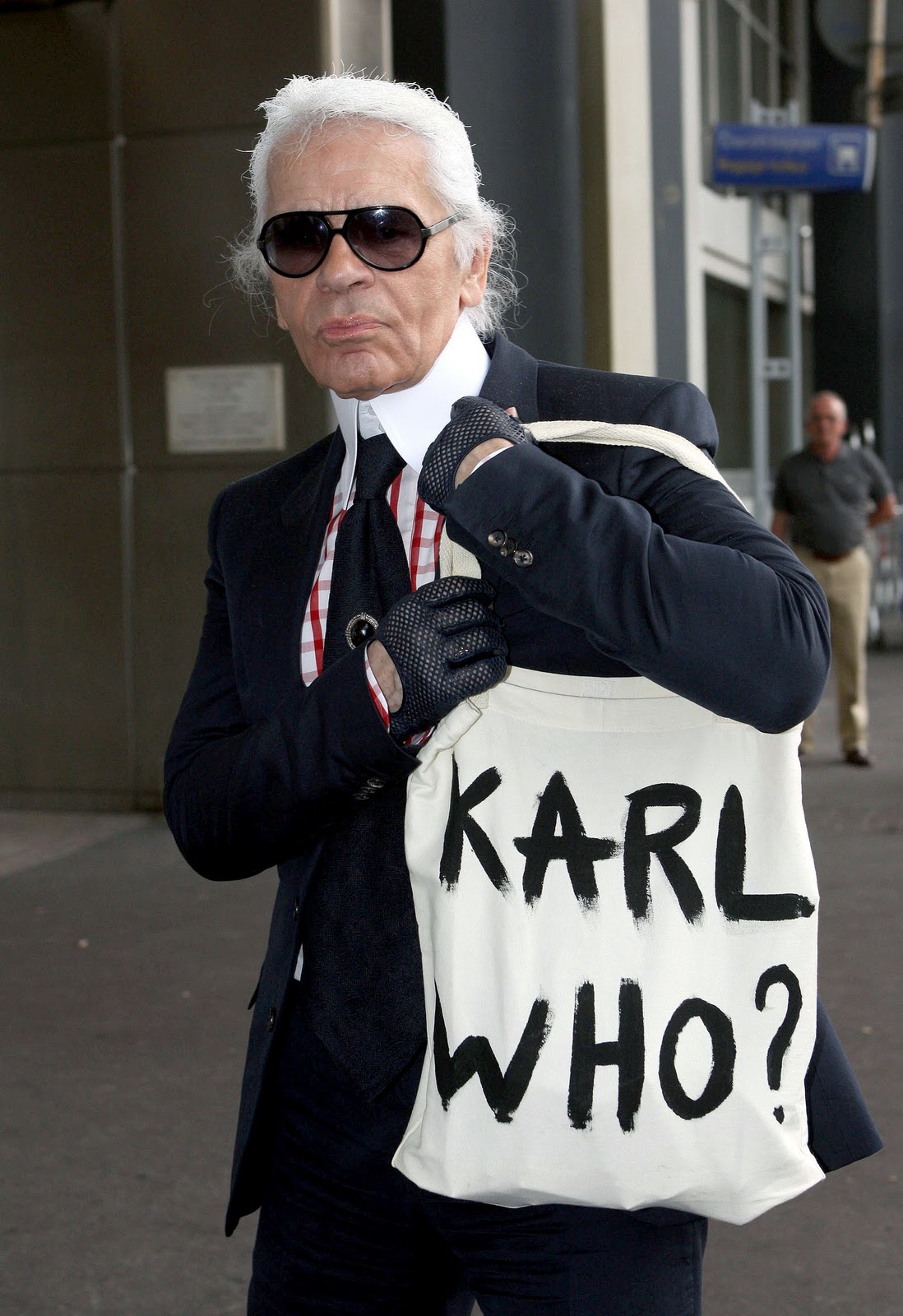
Thankfully others in the fashion industry, such as Chanel’s Karl Lagerfeld, show some semblance of fun–particularly as to tote bags. But given that the one he’s sporting below was made by Naco Paris in response to winning a trademark suit brought by Chanel, maybe not so much.

Happy (Registered Trademark) Holidays!

December 22, 2017—December is one of the largest shopping months of the year, due mostly to the overlap of multiple major holidays, such as Hanukkah and Christmas, and the coming new year. It is perhaps unsurprising, then, that several companies and creatives invoke the spirit of the holidays through festive marks–to great financial gain. But you might be surprised to learn just how many holiday-themed trademarks have been registered with the U.S. Patent and Trademark Office over the years. Take a look at some recent trademark search results for common holiday terms:

  • Hanukkah/Chanukah: 49 registrations (e.g., “Happy Hanukkah!”)
  • Kwanzaa: 27 (e.g., “Kwanzaa Teddy”)
  • Christmas: 2,202 (e.g., “A Christmas Story”)

Source: All Ticket

  • Merry Christmas: 87 (e.g., “Merry Christmas Ya Filthy Animal”)
  • Christmas Tree: 138 (e.g., “Christmas Tree Hugger”)
  • Jingle Bells: 58 (e.g., “Jingle Bell Rock Candy”)
  • Happy Holidays: 34 (e.g., “Happy Holiday Salad”)
  • Dreidel: 27 (e.g., “Outer Space Dreidel”)
  • Yule: 51 (e.g., “A Cool Yule Tool”)
  • New Years: 226 (e.g., “Sing in the New Year”)
  • Nutcracker: 103 (e.g., “Hip Hop Nutcracker”)

Source: Ticket Star

  • Frosty: 383 (e.g., “FrostyBites Frozen Yogurt”)
  • Scrooge: 47 (e.g., “Scrooge McJellz”)
  • Rudolf/Reindeer: 50 (e.g., “Joe the Suntanned Reindeer”)
  • Santa Claus: 134 (e.g., “Camouflage Santa Claus”)
  • Saint Nicholas/Saint Nick: 55 (e.g., “Saint Nicks Flying U.F.O.”)
  • Elf/elves: 596 (e.g., “Zombie Elves”)
  • Bah Humbug: 32 (e.g., “Humbug’r”)

Source: Oregon Beer Project

  • Grinch: 46 (e.g., “Grinch’s Cave Maze”)
  • Krampus: 13 (e.g., “Krampus Cookies”)
  • Snowman: 119 (e.g., “Snowman: the Eighty Dollar Champion”)
  • Snowflake: 191 (e.g., “Yeti Snowflake”)
  • Resolutions: 5 (e.g., “Resolutions It’s a New Year Every Day”)

No matter how one celebrates, and whether near or far from friends and family, the excitement surrounds us at every turn, gifting us with clever brands and slogans (as noted above). Happy holidays and a joyous new year!

Oliver Babish: Fictional Lawyer, Accurate Advice

December 20, 2017—Nearly four years ago, Friend of the Blog Derek Allen and I published an article on our Top 10 Fictional Lawyers of all time. Part 1 and Part 2 are etched in the tomes of Duets Blog for your perusal and criticism. It was difficult to decide on the top ten, but we felt like we covered our bases pretty well with a long list of “honorable mentions.” Yet I recently realized there was a glaring omission from our list, Mr. Oliver Babish from the television series The West Wing, played by the actor Oliver Platt. I knew it was necessary to amend the list as soon as possible (i.e., the next time I was scheduled to post) to correct this injustice, and pass along some nuggets of legal advice that Mr. Babish provided to us all. With this year’s increased attention to political issues of all kinds, I continued to find myself remembering scenes from the show. When my wife mentioned she had recently finished a new series, and I realized she had not seen The West Wing, the choice was obvious. So now we are knee deep in Season 3, when Mr. Babish arrives. I’ll try to avoid any significant spoilers, but Mr. Babish’s arrival coincides with a major scandal involving all of the main characters of the show, from the President and the First Lady to the assistants, deputies, and advisors. Mr. Babish interviews each of them, one by one, to assist in determining whether any law has been broken, fighting most of them along the way. While each character is initially frustrated and annoyed with Mr. Babish’s questions, he quickly makes clear why his questions are so important. While the substance of the inquiries likely has no direct impact on our lives, I’d like to provide three pearls of wisdom that both lawyers and non-lawyers would do well to remember.

First, gather all the facts before you form an opinion. After speaking with the President for (presumably) a half hour or more, he leaves for another meeting. The Chief of Staff asks, “Well, what do you think?” Babish’s answer? “I am nowhere close to being able to answer that.” Don’t give your clients, fellow attorneys, or others advice based on incomplete advice. When it can’t be avoided, stick to the law school standby, “it depends.”

The second pearl involves the White House Press Secretary, C.J. Cregg. In the midst of asking substantive questions, the following exchange occurs:

Oliver Babish:  Do you know what time it is?
C.J. Cregg:  It’s five past noon.
Oliver Babish:  I’d like you to get out of the habit of doing that.
C.J. Cregg:  Doing what?
Oliver Babish:  Answering more than was asked.
Oliver Babish:  Do you know what time it is?
C.J. Cregg: Yes.

The point is that C.J. will likely be subpoenaed to testify and be deposed. While limiting the answers is part of the goal, this advice has the added benefit of conditioning a person to focus on the question and think through the answer before speaking. This is great advice not just for those being deposed, but all of us when we’re engaged in important conversations, legal or otherwise.

Finally, the third pearl is that words matter apart from their substance. While questioning the First Lady, Babish is focused on the First Lady’s signing a form on behalf of her then 17-year-old daughter (Warning: Possible Spoilers ahead). The First Lady states she doesn’t remember if she read it or not, she just signed it. It was one of hundreds or thousands of forms signed for her multiple children over many years. The reason this matters, is because the President (Spoiler Alert) was diagnosed with MS during the campaign, but never disclosed it. If the First Lady signed the form, then she may have falsely stated that there was no family history of medical problems. When she claims she didn’t read it, Babish asks her whether when she was a practicing doctor whether she had a habit of signing medical forms without reading them. When the First Lady explains that the illness is not genetic and therefore it doesn’t matter for the form’s purpose of determining whether her daughter might have the illness, Babish asks why she’s changing her story. Did she sign it because she didn’t read it, or did she sign it because it didn’t matter?  It’s important for lawyers, our clients, and most people generally to remember Babish’s point: the way you say something is just as important as the substance of what you’re saying.

These are just some of the helpful nuggets for lawyers and others found in Mr. Platt’s Oliver Babish character. The guest performance netted him a nomination for an Emmy for best guest performance in a drama. Where would a place him in the Top 10 Fictional Lawyers of All Time? I’d probably have to do some reshuffling, so let’s peg him at #11 for now and perhaps we’ll revisit on the fifth year anniversary.

Trademark Enforcement in the Social Media Age

December 7, 2017—Attorneys in general, and trademark attorneys in particular, have a reputation for heavy handedness. The traditional weapon of choice for these legal pugilist has been, and continues to be, ye olde cease and desist letter. A long, unnecessarily wordy letter sprinkled with “without authorization”‘s and “reserves all rights and remedies”‘s and other thinly veiled and not-so-thinly veiled threats of legal action. There are times when the traditional cease and desist letter is acceptable – Nay! – all but necessitated! But attorneys with an eye on their client’s business goals understand that there is no such thing as a one-size-fits-all enforcement communication. Indeed, the trademark tomes are jammed to the brim with tales of trademark owners whose actions have earned them the alleged label of a “trademark bully.”

But Bud Light’s recent dispute with a local Minneapolis brewery was just the opposite. Instead of creating a public relations nightmare, fanning the flames of “Big Beer” versus “Craft Beer,” Bud Light turned a trademark dispute into an advertising boon! The issue involved Bud Light’s newly adopted advertising tagline DILLY DILLY, which appeared in a Bud Light commercial earlier this year. Modist brewery chose to name its new Mosaic Double IPA “DILLY DILLY.” At the moment, the beer is still posted on the Modist Brewing website. The companies reached a friendly agreement and Bud Light even offered Modist two free tickets to the Super Bowl (which, coincidentally, will be in Minneapolis). And then, like a foam cherry on top, Bud Light hired an actor to visit the Modist taproom and “deliver” a cease and desist message from a scroll in medieval tongue. Modist plans to exhaust its current supply and then, if the beer is brewed again, use a different name. Even if the beer comes back as a new name, Modist will still have Ye Olde Scroll, which Modist has hung in its taproom.

In this instance, everyone seems to win. Bud Light received favorable press coverage throughout the country on the issue and put all other breweries on notice of its claimed rights in the DILLY DILLY tagline. Modist received some great free publicity, two months ahead of the biggest sports party in the United States. I have to assume there will be more than just a handful of beer drinkers coming for Super Bowl festivities, wanting to go to the Dilly Dilly brewery and get a picture with Ye Olde Scroll.

Scrolls won’t be the next big thing in trademark enforcement. However, this is another example of how creative legal approaches can not only resolve a problem more efficiently, but end up creating other benefits for your business or clients. And with the number of breweries and beers expanding at an exponential rate the last few years, the industry will need to continue to find creative solutions to these problems. It’s great to see even the big players in the industry recognize this need.

Beer Brand Battles: David Takes on City Hall (with Goliath on the sidelines)

November 30, 2017—The City of Portland is known as a hub for craft beer, and its local government couldn’t be prouder. The Travel Portland website proudly proclaims that Portland is “home to more breweries than any other city on earth.” Yet the city’s relationship with the local craft beer scene is not so bubbly at the moment, as trademark dispute between the city and local Old Town Brewing has gone public.

The dispute revolves around Old Town Brewing’s logo and a large lighted sign owned by the city, both shown below.

This isn’t the first time the city has gotten into a dispute with a brewery over the sign. The city previously objected to Pabst’s use of a logo derived from the sign back in 2015.  Our 2015 article contains a good back story as to the city’s purchase of the sign as well as the city’s claimed trademark rights in the sign (and for our regular readers, the investigation into Portland’s unicorn burial ground is ongoing). However, for our purposes, a TLDR history will suffice. The sign is known as the “White Stag” sign and was built in 1940. The text has changed numerous times along with the ownership. The City of Portland purchased the sign in 2010 and has since begun licensing reproductions of the sign to third-parties.

Most recently, Portland sought to license production of the sign to AB InBev, the parent company to Budweiser and a whole host of other big and small names in the alcohol business. Jeff Alworth at the Beervana Blog has a great write up regarding the dispute that is worth a read. As you might expect, the small, local craft brewery is not pleased with Portland’s attempt to permit a direct competitor to use a similar logo. The fact that the competitor is Budweiser certainly can’t help.

Luckily for Old Town, they recognized the benefits of obtaining a registration for their design logo at the U.S. Trademark Office. Even better, the registration is now more than 5 years old and can no longer be challenged on a number of grounds, like confusion with a senior user’s mark.

The City of Portland also recognized the importance of registrations and applied to register the image of the sign for a wide variety of goods and services, including alcoholic products. The Trademark Office has refused registration based on a likelihood of confusion with Old Town’s prior registration.

The situation is a twist on the more common David versus Goliath of Big Beer versus Craft Beer, and not simply because the City of Portland is involved. In fact, the city is claiming that David, aka, Old Town Brewing, is the bad guy. The City is arguing that “it is Old Town Brewing that is trying to prevent the City from using its own logo.”

The city isn’t entirely off base. It’s true that the City isn’t telling Old Town to stop using the logo. But the City’s argument makes a lot of assumptions that may not hold water (or other beverages, for that matter).

The city seems to assume that because the City bought the sign, they own the right to use the component images of that sign for any and all purposes. That’s wrong. For a lot of reasons. Owning a sign doesn’t create trademark rights, use does. And if Old Town began using a portion of that sign as a trademark before any other third-party, then Old Town is the senior user. Also, even if the City owns some trademark rights, the law is clear that a trademark does not provide a right in gross. Trademark rights are defined by the goods or services sold under the mark, with protection against goods and services that are sufficiently related to owner’s goods or services.

Also, the City’s white hat isn’t so white. I’m not even sure it’s a hat. Old Town isn’t the bad guy here. The brewery isn’t telling the City not to use the logo derived from the sign design.  I’m not a politician or a mayor, but I can’t think of any reason why a city needs to be able to use its logo to sell beer. If Minneapolis were doing this, I’d kindly ask that they fix the potholes or finish construction on the bridges over 35W first.

At the moment, it seems that public opinion seems to be in Old Town’s favor, at least based on the limited (and biased) sampling of Old Town’s Facebook Page.  From the legal standpoint, it seems that Old Town has an upper hand, but from all public statements it seems that Portland is committed to moving forward with its own applications and a license. But is a deal with Budweiser important enough to risk the bad press and the alienation of the craft beer industry? The City has until March 15 to appeal the Trademark Office’s last Office Action. By then, we’ll at least know whether Portland wants to continue the fight. In the meantime, I’ll be looking to see how far Old Town distributes its products. Their SHANGHAI’D IPA sounds delicious, not to mention, it has an excellent name.

Supreme Court Justices’ Questions in Oil States Suggest Inter Partes Review Will Be Upheld as Constitutional

December 28, 2017—On Monday, November 27, 2017, the U.S. Supreme Court heard argument in Oil States Energy Services, LLC v. Greene’s Energy Group, LLC, No. 16-712. The case presents a direct challenge to the U.S. Patent and Trademark Office’s (“USPTO’s”) “inter partes review” (“IPR”) process, under which third parties can petition the USPTO’s Patent Trial and Appeal Board (the “PTAB”) to cancel one or more claims of an already-issued patent.

Photo Credit: Fox

ScotusBlog recently offered a brief introduction to Oil States’s “remarkably pedestrian” backstory:

Petitioner Oil States sued respondent Greene’s Energy, contending that Greene’s Energy was infringing a patent that Oil States holds on technology useful for preserving wellhead equipment in the oil and gas industry. Predictably, Greene’s responded by seeking inter partes review, hoping that the PTO would invalidate the Oil States patent. When the PTO concluded that the patent in fact was invalid, Oil States raised the stakes, arguing that Congress violated Article III and the Seventh Amendment when it authorized an administrative agency to invalidate the patent without affording Oil States an opportunity for a jury trial.

If the Supreme Court decides that IPR is unconstitutional, the holding will have major consequences. As an initial matter, many would-be litigants have chosen to pursue IPR petitions instead of patent defenses or claims in court because the IPR process is faster and more cost-effective than federal litigation. For example, a typical medium-sized patent dispute costs around $3M to litigate in federal court, but IPR proceedings are one-tenth the cost. The average time to trial is around 2 years, 3 months, whereas IPR proceedings take just over half as long to conclude. In addition to offering advantages to litigants, IPR proceedings have played a significant role in lightening the federal patent docket, addressing more than 1,000 patent cases with dispositive effect. Usually, patent cases are stayed pending an IPR proceeding. Thus, the IPR process in many cases eliminated the need for protracted federal litigation.

As Oil States neared oral argument, several commentators offered their take on how the case might turn out. But the Justices’ questions at oral argument provide better hints at whether affirmance or reversal will result:

Right out of the gate, Chief Justice Roberts asked the petitioner, Oil States, to explain its distinction between the USPTO’s post-grant procedures that are “examinational” in nature, versus those which are adjudicative. The distinction relates to the federal government’s separation of powers between its three branches, with the judiciary serving the role of adjudicating disputes–as provided by Article III, which vests the “judicial power” in the federal courts. Getting to the heart of the matter, Justice Sotomayor asked, “What is so fundamentally Article III that changes [the IPR] process into an Article III violation?” Suggesting an answer to her own question, the Justice stated, “Both [IPR processes and other post-grant processes] are just informing the PTO of the nature of its error and giving it an opportunity to correct its error.” Justice Ginsburg later chimed in: “[IPR] is geared to be an error correction mechanism and not a substitute for litigation.” Justice Breyer appeared to agree, stating, “I thought it’s the most common thing in the world that agencies decide all kinds of matters through adjudicatory-type procedures often involving private parties. So what’s so special about this one…?” Justice Kagan remarked, “it seems a little bit odd to say, sure, the government can reexamine this…but there’s some line that falls short of what” is constitutional.

Justice Gorsuch suggested that the distinctions between permissible examination and impermissible adjudication could be avoided by focusing on whether there is a private or public right involved, the idea being that public rights (e.g., licenses) need not be adjudicated by an Article III court. Justice Kennedy asked, “[C]ould Congress say…we will grant you a patent on the condition that you agree to this procedure; otherwise, we don’t give you the patent?” Justice Alito later asked a similar question. Justice Kennedy followed up, “Could Congress say that we are reducing the life of all patents by 10 years?” When counsel for Oil States answered yes, he responded, “Well, then that–doesn’t that show that the patent owner has limited expectations as to the scope and the validity of the property right that he holds?” Justice Gorsuch begged to differ, however, stating “we have a number of cases that have arguably addressed this issue…in which this Court said the only authority competent to set a patent aside or to annul it or to correct it for any reason whatever is vested in the courts of the United States.” But Justice Sotomayor, seemingly rejecting that argument, stated that at least one of the cases cited by Justice Gorsuch (McCormick v. Aultman) did not involve determinations of constitutional law, nor did it involve statutory analysis of post-grant procedures because none were applicable or available at the time that case was decided.

Turning to the respondent, Greene’s Energy, Justice Breyer fired off the first question, asking whether it was a “problem” that a company could invest $40B in developing a patent and could have it for 10 years before an IPR proceeding cancelled the patent. He asked, “Is there something in the Constitution that protects a person after a long period of time and much reliance from a reexamination at a time where much of the evidence will have disappeared,” suggesting a due process-flavored argument. Chief Justice Roberts followed up, asking whether Greene’s Energy’s position is that “If you want the sweet of having a patent, you’ve got to take the bitter that the government might reevaluate it at some subsequent point.” Finding agreement, he said, “Well, haven’t our cases rejected that…proposition? I’m thinking of the public employment cases, the welfare benefits cases. We’ve said you…cannot put someone in that position.”

The discussion shifted to whether the availability for subsequent judicial review of the PTAB’s IPR decisions bears on IPR’s constitutionality. Justice Sotomayor remarked, “That..was what troubled me deeply about you telling Justice Kagan that, without judicial review, that this would be adequate. I mean, for me, this–what saves this, even a patent invalidity finding, [is that it] can be appealed to a court….[H]ow can you argue that the…PTO…has unfettered discretion to take away that which it’s granted?”

Justice Gorsuch again brought up the public-private rights distinction, noting that “there’s an abundance of law going back 400 years. Justice Story says it. I mean, you know, this is not a new idea, that once [a patent is] granted, it’s a private right belonging to the inventor.”

Finally, the Court turned its attention to the Government’s argument. Justices Gorsuch and Roberts asked about the “bitter with the sweet” argument. The Government responded that employment and welfare decisions are often made by executive officials and must always comport with due process, but need not be adjudicated by courts in the first instance.

Justices Breyer and Roberts then steered the conversation toward factors that might help distinguish private rights from public rights. Justice Breyer expressed the view that the large investment underlying a patent might justify a due process or takings clause argument, but the Government responded that there is no as-applied challenge in this case.

The Government also brought up the adjudication versus examination point, arguing that IPR is distinct from typical judicial functions, which involve determining liability between private litigants and assessing monetary damages. For example, an infringement action involves determining liability for use of a patented idea and the reasonable royalty damages that should be paid for that use. IPRs, on the other hand, merely address patentability and do not involve liability or damages. The Government also noted that the executive frequently employs adjudicative proceedings to take appropriate executive action. IPR is no different.

In the end, as always, divining the eventual decision from the Justices’ questioning is more art than science–no puns intended. Justices Sotomayor, Ginsburg, Breyer, and Kagan all appear to endorse the view that IPR proceedings do not violate separation of powers. Justices Kennedy and Alito also seem to fall in the same camp. On the other hand, Justices Breyer, Roberts, and Sotomayor’s questions suggest that these Justices think there may be serious due process concerns. Only Justices Gorsuch, Breyer, and Roberts were interested in the public rights versus private rights distinction, but two of those Justices expressed doubts about the distinction’s defining features. If I had to call it, I would guess that the Court will find that IPRs, as currently structured, do not violate separation of powers or due process and are therefore constitutional. Stay tuned for updates on this important case.

Gucci: The Other Stripe Mark

November 8, 2017—Normally when we talk about stripes trademarks , we’re talking about iconic sportswear brand adidas. An avid litigant with respect to use of “three stripe” designs on footwear and clothing, adidas is a regular feature here at DuetsBlog, where we have discussed disputes with lululemonPuma, and retail store Forever 21. But today we’re talking about a different three stripe brand, the blue-red-blue and green-red-green three stripe designs featured by luxury brand Gucci. Not everything is new though. Gucci’s foil in this dispute is no stranger to stripe-infringement claims, as our friend Forever 21 makes another appearance.

Over the past year, Gucci sent cease and desist letters to Forever 21 regarding the sale of clothing and accessories featuring a familiar striped pattern. Following an exchange of letters, Forever 21 struck first, filing a complaint requesting declaratory judgment that its sale of the products does not infringe Gucci’s rights, and requesting that the court cancel Gucci’s registrations on the grounds of lack of secondary meaning and/or genericness. In its answer, Gucci asserted claims of trademark infringement, trademark dilution, and unfair competition. Excerpts from Gucci’s answer displaying the clothing at issue are shown below (with additional examples here and here).

In its answer, Gucci only addressed Forever 21’s non-infringement count. Prior to filing the answer, Gucci filed a Motion to Dismiss all the claims related to cancellation of Gucci’s registrations. On Monday November 6, the District Court issued an order granting the motion, providing Forever 21 with 10 days to file an amended complaint.  In the order, the court suggests that Forever 21 may have an uphill battle in pursuing these claims, stating:

[T]he court is skeptical that plaintiff has sufficiently alleged facts to support its claims for cancellation based on lack of secondary meaning, aesthetic functionality, and genericism.

So while I’d love to get into the substance of whether Forever 21 has a chance at cancelling these “three-stripe” registrations, we’ll have to see whether Forever 21 is able to craft an amended complaint to overcome the court’s concerns. In the interim, I’m left considering Gucci’s three stripe marks alongside adidas’ three stripe marks. In reviewing each parties’ registrations, an interesting detail emerges. Both parties own registrations for stripe designs associated with clothing, but that doesn’t mean both parties have the same type of registered rights.

For adidas, it registered its stripes as trade dress for its products. For example, Reg. No. 3,029,127 describes the registered mark as “three parallel stripes running along the sleeve of a shirt, t-shirt, sweatshirt, jacket or coat.” The drawing of the mark is shown below.

Clearly, adidas’ registrations is specifically for a stripe patterned applied to jackets.

Gucci’s registered rights? Not so much. Based on the registrations identified in Gucci’s answer and counterclaim, none of Gucci’s registrations cover trade dress. All of the registrations instead appear to be for an image of stripes. The descriptions for Gucci’s marks are all similar to Reg. No. 4,379,039, which describes the mark as “a stripe containing three distinct bands of color with a red band in the middle of two green band.” The drawing for the registrations is simply a square with three stripes.

Does Gucci’s failure to register its mark as trade dress affect Forever 21’s ability to cancel the registrations for these design logos? Normally use as a trademark is on a tag, label, on the pocket, or emblazoned across the shirt. If Gucci’s actual use of the registered mark is limited solely to the trade dress along the bottom or cuffs of jackets, does it open up any potential claims for cancellation based on non-use? Does Gucci’s failure to register its mark as trade dress affect Gucci’s ability to assert that Forever 21 is infringing a federally registered trademark? I guess we’ll find out whether Forever 21 wades into these waters when (or if) it files its amended complaint. Stay tuned.

University of North Dakota Abandons Sioux Mascot, but not Sioux Mark

November 2, 2017—The weekend of October 20-21, 2017, the Minnesota Golden Gophers and North Dakota Fighting Hawks traded wins in one of college hockey’s most competitive series. While watching the NCHC broadcast, an ad for the “Sioux Shop” appeared on screen. The ad explained that the Sioux Shop sells North Dakota fan gear at Ralph Englestad Arena (affectionately referred to by North Dakota fans as “the Ralph”), the 400,000 square foot, first-class hockey palace in Grand Forks where the Gophers and Hawks were facing off. I was surprised by the ad, especially in view of the fact that the University of North Dakota is no longer referred to as the “Sioux.”

Picture credit: Pinterest.

The Sioux Shop ad also reminded me of a recent experience I had when flying Southwest Airlines, in which a gate staff member was wearing a Fighting Sioux lanyard. As many frequent Southwest fliers can attest, Southwest’s employees often wear memorabilia of their favorite sports teams. I asked the staff member where she got the lanyard, as it appeared to be new. She replied that the University is still licensing the mark so as not to abandon it and that she picked it up from a licensed merchandiser. Apparently, you can also buy Fighting Sioux gear on Amazon.

As many hockey fans know, the University recently changed its mascot to the Fighting Hawks, from the Fighting Sioux, after backlash from the NCAA and a statewide ballot initiative approved the change. The “Fighting Sioux” is also one of several arguably-disparaging marks based on Native American culture that have been criticized in recent years. For example, the Fighting Sioux trademark is similar to the R-word trademark, which was challenged and later upheld by the U.S.Supreme Court this summer. With this political and legal background in mind, I thought to myself when watching the Sioux Shop ad, “Didn’t North Dakota change it’s sports mascot to the Hawks, and, if so, why does the fan shop still bear the ‘Sioux’ name? Can NCHC, an NCAA conference, even run an ad for a shop selling merchandise bearing a name similar to one that the NCAA singled out as ‘hostile or abusive’?” Just what is going on here?

It turns out that the Southwest staff member was right: the University still licenses the Fighting Sioux trademark so as to avoid abandonment. The reasons appear to be threefold: First, the University agreed in a 2007 settlement with the NCAA that it would maintain the Fighting Sioux trademark. Second, the school appears to be concerned that if it does not license the trademark and control the flow of Sioux merchandise, someone will flood the market and stymy efforts to phase in the Fighting Hawks mascot and phase out the Fighting Sioux mark. Ironically, then, in order to effectively stop using the Fighting Sioux name, the University must “use” the mark. Third—and perhaps this is unfair cynicism—money.

The Lanham Act provides that a trademark may lose its viability through abandonment when the holder of the mark both discontinues use of the mark and intends not to resume use of the mark. See 15 U.S.C. § 1127. The law states that nonuse for three consecutive years is prima facie evidence of abandonment. See id. Clearly, the University hasn’t run into that issue yet. However, the issue that the University does face is whether it is making a “bona fide use” of the Fighting Sioux mark “in the ordinary course of trade, and not made merely to reserve” its right in the mark. Id. Reductions in the use of a mark may contribute to a finding of both prongs of the abandonment test. So can failure to take action against infringers. Of course, whether a reduction in use and a change in the scope and extent of licensing shows abandonment depends on the facts and circumstances of each case.

The University’s current licensing strategy definitely toes the blue line on bona fide use. It appears that the University is only licensing productions of 9,000 pieces of merchandise at a time and in limited auctions. Such small offerings surely dwarf those available to fans in the years leading up to the mascot switch. On the other hand, the offerings are in the same category: sportswear. The geographic range of the sales is also smaller than before. In addition to the practically-discontinued use of the mark, the University’s licensing also seems disingenuous. One reason for maintaining the mark is to control the supply of Fighting Sioux gear competing with Fighting Hawks gear, and I’m not sure that purpose shows intent to use the Sioux mark (rather than mere reservation of it). I’m also skeptical that using the mark is helping transition efforts; as one source reports, new Fighting Sioux gear has been known to sell out very quickly, and fans continue to cling to the name–not to mention the Ralph, which has over 2,500 Sioux logos plastered throughout the arena in fulfillment of its late eponymous benefactor’s desire to protest a mascot name change.

Whether the University’s current use of the mark can stave off the threat of abandonment, while at the same time render the Fighting Sioux mark obsolete, remains to be seen. For now, North Dakota hockey fans are stuck between two mascots, and neighboring rivals look on in confusion, with no clear end in sight.