A powerful blue wave swept across much of the country on Election Day in what many analysts described as a repudiation of President Trump. In Minnesota, DFL candidates at the top of the ticket posted decisive victories. Lieutenant Governor Peggy Flanagan defeated Republican Michele Tafoya by more than 10 percentage points in the U.S. Senate race, while U.S. Senator Amy Klobuchar defeated Republican House Speaker Lisa Demuth by nearly 13 points, the largest margin in a Minnesota governor’s race in 30 years. The DFL also retained all three other constitutional offices, with Steve Simon winning reelection as Secretary of State, Zack Filipovich winning the State Auditor’s race, and Keith Ellison winning reelection as Attorney General. Notably, Republican Congressman Brad Finstad lost his re-election campaign by a razor-thin margin in a district that wasn’t considered competitive until the last few months.
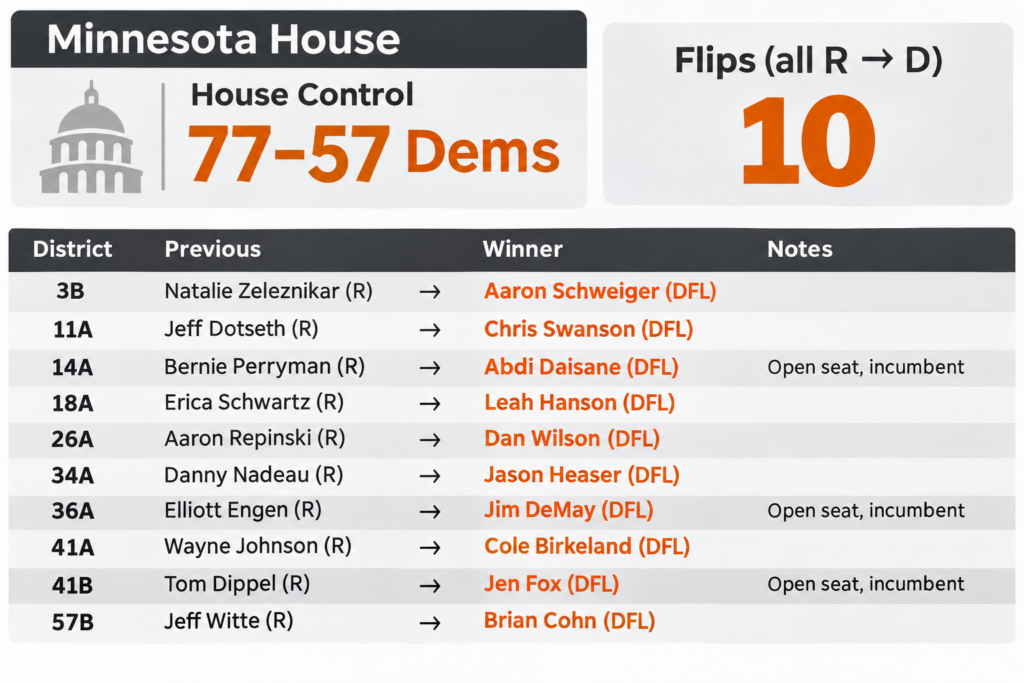
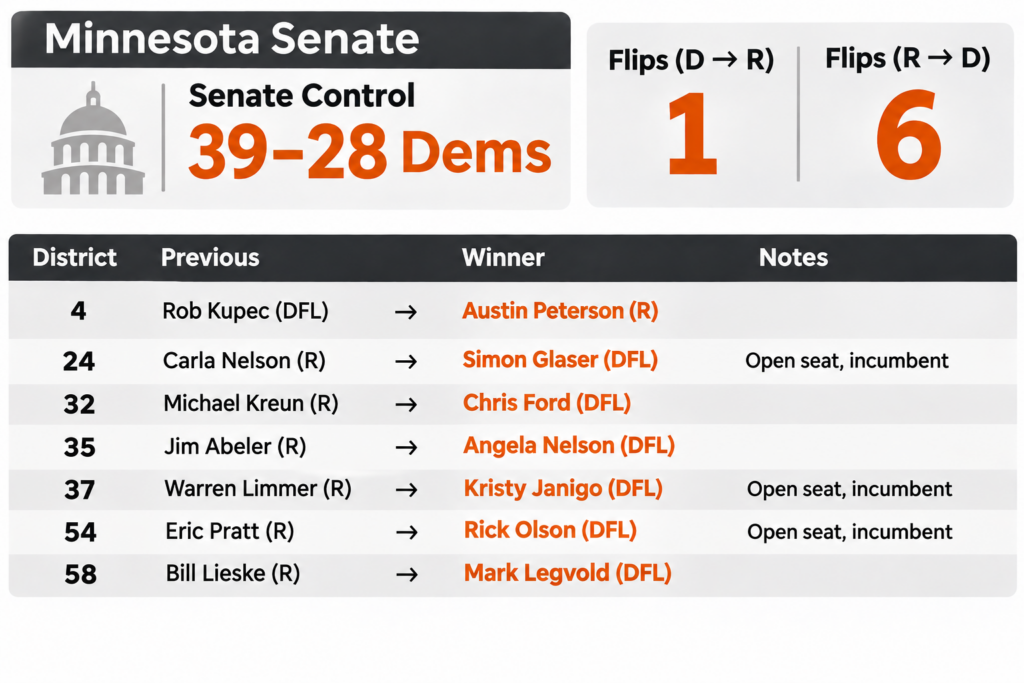
In the Minnesota House, the DFL held every seat and flipped 10 Republican seats, securing a comfortable 77–57 majority. In the Senate, the DFL lost one competitive seat by just four votes, triggering an automatic recount, but flipped six Republican seats to expand its majority to 39–28. These results restore the DFL trifecta that advanced an ambitious policy and budget agenda in 2023–2024, when the state had a substantial budget surplus.
The financial picture heading into 2027 is considerably tighter than it was during the last DFL trifecta. While tax collections over the summer and into the fall have exceeded expectations, projected spending continues to outpace ongoing revenues, leaving limited room for new commitments in the next two-year budget. The state’s next budget forecast, expected in early December, will help clarify the outlook. With a governor-elect who has said she will not raise taxes, DFL leaders will face difficult choices as they balance existing services, rising costs, and new priorities.
November 4, 2026
Mentioned Attorneys and Professionals